7 Things Your Feet Only Tell You at the End of a Standing Shift
Quick Answer: Feet swell measurably across a standing day, so shoes fitted in the morning are the wrong size by 4pm - which is the root of most end-of-shift symptoms. Burning across the ball of the foot, numb toes, arch ache that eases when you walk, and heel pain on the first steps the next morning each point to a different specific fix. Fit shoes in the afternoon, rotate two pairs across the week, and treat morning heel pain as the one signal worth taking to a professional.
At 8am the shoes are fine. At 4:30pm they are a completely different pair, and your feet have opinions they did not have at lunchtime.
Here is what each of those signals is actually telling you.

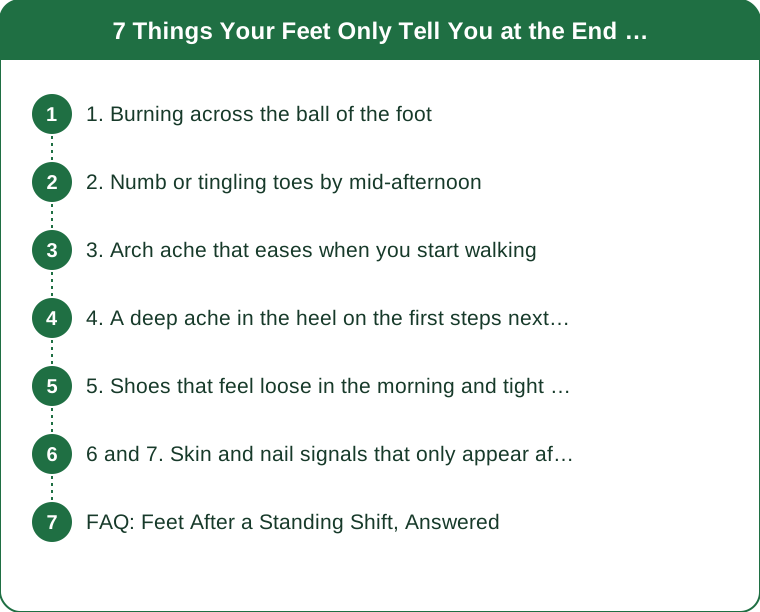
1. Burning across the ball of the foot
What it means: sustained pressure on the metatarsal heads, usually because the shoe is too narrow at the forefoot or the sole has lost its cushioning without you noticing.
Why it shows up late in the shift: foot volume increases through the day, so a shoe with adequate forefoot width at 8am is genuinely compressive by mid-afternoon. The burning is a pressure symptom, not a fatigue symptom.
The fix: a wider toe box, and shoes fitted at the end of a day rather than the start. Metatarsal pads placed just behind the ball of the foot redistribute pressure and cost very little.
What does not fix it: thicker socks, which reduce the available space and make the compression worse.
Worth checking: whether the shoe flexes at the ball of the foot or in the middle. A sole that bends in the middle offers no support where you need it.
2. Numb or tingling toes by mid-afternoon
What it means: compression of nerves between the metatarsals, or laces tied too tightly across the top of the foot.
Why it shows up late: the same swelling mechanism. A lacing pattern that was comfortable in the morning is a tourniquet by 3pm on a warm day.
The fix: loosen the laces at lunchtime, deliberately, every day. It sounds trivial and it resolves a large share of afternoon toe numbness on its own.
When it is more than fit: persistent numbness between the third and fourth toes, sometimes with a feeling of standing on a pebble, can indicate a neuroma and is worth having looked at.
Warning sign: numbness that does not resolve within a few minutes of taking the shoes off deserves proper assessment rather than a shoe change. This is general information, not medical advice.
3. Arch ache that eases when you start walking
What it means: static standing loads the arch continuously with no muscular pumping, which is why standing still is harder on feet than walking is.
Why walking helps: movement engages the calf muscle pump, restores circulation, and varies the load across different structures instead of holding one position.
The fix: shift weight deliberately every few minutes, and if you can, use an anti-fatigue mat. A mat produces a bigger improvement than most shoe upgrades for people standing in one spot.
Also effective: taking 60 seconds every hour to rise onto the toes ten times, which activates the pump directly.
What to avoid: locking the knees and standing with weight on one hip for long stretches, which is the default posture and the one that concentrates load worst.

4. A deep ache in the heel on the first steps next morning
What it means: this is the classic presentation of plantar fascia irritation, and it is the one signal on this list that is genuinely worth acting on early rather than adapting around.
Why the morning: the fascia shortens overnight and the first loaded steps stretch it abruptly. Pain that is worst for the first few minutes and then eases is the characteristic pattern.
What helps: calf and fascia stretching before getting out of bed, supportive shoes from the first step rather than bare feet on a hard floor, and reducing the total standing load where possible.
What makes it worse: walking barefoot on hard floors at home after a standing shift, which is what almost everyone does.
When to get help: if it persists beyond a few weeks, worsens, or you are compensating by walking differently. Early treatment is considerably more effective than late. This is general information, not medical advice.
5. Shoes that feel loose in the morning and tight at night
What it means: normal, expected foot volume change - not a defect in you or the shoes.
How much: feet swell measurably across a day of standing, which is why professional fitting advice is consistently to fit shoes later in the day.
The fix: buy shoes in the afternoon, and buy them to fit the afternoon foot. A shoe that is slightly roomy at 9am and correct at 4pm is the right shoe for a standing job.
Lacing helps more than sizing sometimes: a lacing pattern that skips an eyelet across the widest part of the foot accommodates swelling without making the heel loose.
Compression socks are underrated here: graduated compression reduces end-of-day swelling for many people who stand all day, and they are inexpensive to try.
6 and 7. Skin and nail signals that only appear after months
6. Calluses in a new place
What it means: the load distribution in your shoe has changed, usually because the midsole has compressed unevenly. Calluses are a map of where pressure now concentrates.
The fix: compare against the wear pattern on the outsole. If the outsole is worn asymmetrically and the callus is new, the shoe is finished regardless of how much tread remains.
Do not: shave calluses aggressively - they formed for a reason, and removing them without fixing the pressure just leaves you with a tender spot under the same load.
7. A toenail that darkens or thickens
What it means: repeated micro-trauma from the toe hitting the front of the shoe, most often because the shoe is a half size too short or the foot slides forward.
Why standing jobs cause it: hours of small shifts and steps, not one dramatic impact. It develops over weeks and is easy to miss until the nail changes colour.
The fix: a thumb’s width of space at the end of the longest toe when standing, and lacing that locks the heel so the foot does not slide forward.
When to check with someone: thickening, discolouration, or separation that spreads across nails can indicate a fungal infection rather than trauma, and the treatments are entirely different. This is general information, not medical advice.
FAQ: Feet After a Standing Shift, Answered
Why do my feet hurt more at the end of a shift than during it?
Feet swell measurably across a standing day, so shoe fit tightens progressively. Most end-of-shift symptoms are compression symptoms caused by a shoe that was correctly sized eight hours earlier.
What time of day should I buy work shoes?
Late afternoon or evening, when your feet are at their largest. Shoes fitted first thing in the morning are reliably too small for the second half of a standing day.
Do compression socks help with standing all day?
For many people, yes - graduated compression reduces end-of-day swelling and the associated aching. They are inexpensive enough to be worth testing for a week.
Should I rotate shoes if I stand all day?
Yes. Alternating two pairs lets midsole foam decompress between wears and changes the pressure pattern slightly, which reduces the risk of a single hot spot developing.
When should I see a professional about foot pain?
Heel pain that is worst on the first steps in the morning and persists for more than a few weeks, numbness that does not resolve after removing shoes, or any pain that changes how you walk. This is general information, not medical advice.
TL;DR:
- Feet swell across a standing day, so shoes that fit at 8am are compressive by 4pm - fit new shoes in the afternoon.
- Burning at the ball of the foot means forefoot compression; loosening laces at lunchtime resolves a lot of afternoon toe numbness.
- Arch ache that eases when you walk is a static-standing problem - an anti-fatigue mat and hourly calf raises help more than new shoes.
- Heel pain on the first steps in the morning is the one signal worth acting on early rather than adapting around.
- Rotate two pairs, watch for new calluses as a sign the midsole is finished, and leave a thumb’s width at the longest toe.
Most of what your feet are telling you at 5pm is a message about your shoes at 8am.
This is general information, not medical advice.
Keep Reading
This article is for general informational purposes only and is not medical advice. Always consult a qualified health professional for guidance specific to you.