7 Signs Your Feet Are Aging Faster Than the Rest of You
Your knees usually get blamed for lower-body complaints, but feet are frequently the actual origin point — and the warning signs show up quietly, years before a real problem forces you to notice. Here are 7 to watch for.

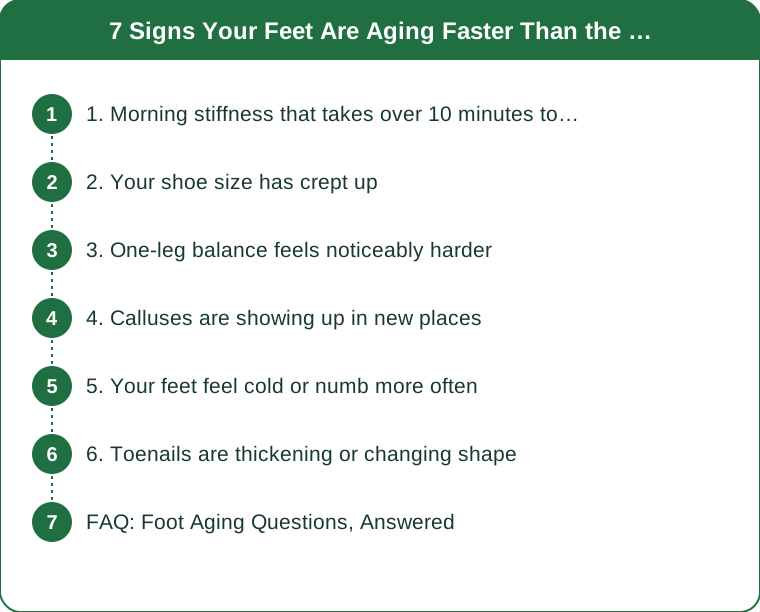
1. Morning stiffness that takes over 10 minutes to ease
A few seconds of tightness on standing is normal. Ten-plus minutes of shuffling before your feet feel normal suggests the plantar fascia is losing elasticity faster than expected for your age — worth mentioning at your next checkup if it’s new.
2. Your shoe size has crept up
Feet can widen and lengthen slightly with age as arch structures loosen. If you’ve gone up half a size in the last few years without weight change, that’s the arch, not the shoe brand.
3. One-leg balance feels noticeably harder
Standing on one leg for 20+ seconds eyes-open is a reasonable benchmark at most adult ages. A sharp recent decline often traces back to weakening small stabilizer muscles in the foot itself, not just the ankle or hip.

4. Calluses are showing up in new places
A callus forming somewhere it never did before means your weight distribution across the foot has shifted, often from a subtly changing gait pattern worth having a podiatrist glance at.
5. Your feet feel cold or numb more often
Occasional circulation changes happen with age, but frequent numbness — especially paired with color changes — is worth a doctor conversation, not just warmer socks.
6. Toenails are thickening or changing shape
Some thickening is normal aging. Rapid or one-sided changes can signal fungal infection or reduced circulation and deserve a proper look.
FAQ: Foot Aging Questions, Answered
Which of these actually needs a doctor, not just stretching?
Numbness with color change, rapid one-sided nail changes, and any new pain that doesn’t ease after a week of rest are the three that warrant a professional look.
Can foot aging actually be slowed down?
Yes, more than most people expect — daily toe-spreading and calf-raise work, well-fitted shoes, and regular safe barefoot time all measurably support foot structure over years.
Is it normal for feet to change shape with age?
Some widening and flattening is common as ligaments naturally loosen, but a sudden or painful change isn’t just ‘normal aging’ and deserves evaluation.
This is general information, not medical advice — persistent pain, numbness, or rapid changes should go to a podiatrist, not a stretching routine.
TL;DR:
- Morning stiffness over 10 minutes and shrinking one-leg balance are early foot-aging signs
- New calluses and shifting shoe size point to changing weight distribution in the foot
- Numbness with color change or rapid nail changes need a doctor, not home care
- Daily toe and calf work meaningfully slows foot aging — it’s not just cosmetic maintenance
Catching these early is the difference between a stretching routine and a walking boot.
Keep Reading
This article is for general informational purposes only and is not medical advice. Always consult a qualified health professional for guidance specific to you.