7 Signs Your Feet Actually Need a Different Shoe Size Than You've Been Buying
Quick Answer: Common signs your usual shoe size no longer fits include visible bulging at the widest part of the shoe, black toenails or blisters at the toe box, numbness or tingling in the toes during wear, a shoe that feels tight only after hours of wear (swelling), needing to loosen laces significantly more than before, and feet that measure differently in a proper store fitting than your assumed size — feet genuinely do change size with age, weight changes, and pregnancy, so periodic re-measuring matters.
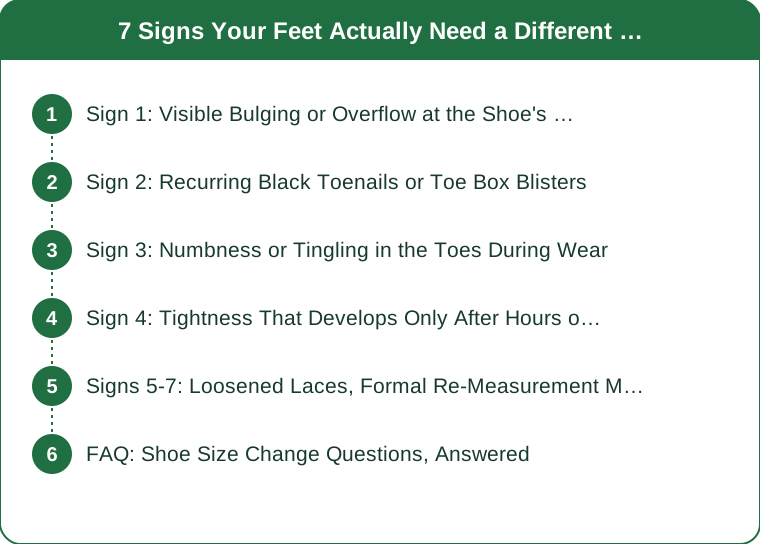
Sign 1: Visible Bulging or Overflow at the Shoe’s Widest Point
If the shoe’s upper material visibly bulges outward at the ball of the foot or little toe area, the shoe is too narrow for current foot width, regardless of length sizing — width and length are separate measurements that both need periodic rechecking.
Sign 2: Recurring Black Toenails or Toe Box Blisters
Consistent pressure or friction at the toes, especially during activities like running or hiking, often indicates the shoe is too short or too narrow in the toe box, forcing repeated toe impact against the shoe’s front.
Sign 3: Numbness or Tingling in the Toes During Wear
This typically signals the shoe is compressing the foot too tightly across the width or top of the foot, restricting circulation or nerve function — a wider or higher-volume shoe option often resolves this specific symptom.

Sign 4: Tightness That Develops Only After Hours of Wear
Feet naturally swell somewhat throughout the day, especially with standing or activity, so a shoe that fits fine in the morning but feels tight by afternoon may be sized with too little room to accommodate normal daily swelling.
Signs 5-7: Loosened Laces, Formal Re-Measurement Mismatch, and Life-Stage Changes
Sign 5 — Needing to loosen laces significantly more than before: if the same shoe model now requires noticeably looser lacing to feel comfortable, foot volume has likely increased. Sign 6 — A professional store measurement showing a different size than assumed: foot size can drift by half a size or more over years without being noticed day-to-day, which a proper fitting reveals directly. Sign 7 — Recent pregnancy, significant weight change, or simply getting older: all three are well-documented causes of genuine, lasting foot size and shape change, not just temporary swelling.
FAQ: Shoe Size Change Questions, Answered
How often should feet actually be re-measured?
Every couple of years for most adults is a reasonable interval, with more frequent re-measuring around pregnancy, significant weight change, or after starting a new high-mileage activity like running.
Can feet get smaller as well as bigger?
Less commonly, but yes — significant weight loss or resolved swelling-related conditions can occasionally result in a smaller shoe size than before, though foot length itself rarely decreases with age.
Is it possible for each foot to need a slightly different size?
Yes, this is common — many people have a meaningful size difference between their two feet, and fitting to the larger foot with appropriate width adjustment is the standard recommended approach.
TL;DR:
- Bulging fabric, black toenails, and toe box blisters usually indicate width or length problems
- Numbness or end-of-day tightness suggest too little room for natural foot swelling
- Loosened laces and a professional re-measurement can reveal size drift you hadn’t noticed
- Pregnancy, weight change, and aging are all legitimate causes of lasting foot size change
A shoe size that was correct years ago isn’t guaranteed to still be correct now — periodic re-measuring catches this before it causes ongoing discomfort.
Keep Reading
This article is for general informational purposes only and is not medical advice. Always consult a qualified health professional for guidance specific to you.