7 Signs Your Orthotics Stopped Actually Working Months Ago
Quick Answer: Orthotics typically lose real structural support well before they look visibly worn — flattened arch support, resurfacing old foot pain, and uneven compression are more reliable signs of failure than appearance alone, and most orthotics need replacing every 1-2 years of regular wear regardless of how intact they look.
Because the breakdown is gradual, most people keep wearing orthotics for months after they’ve stopped providing meaningful support.

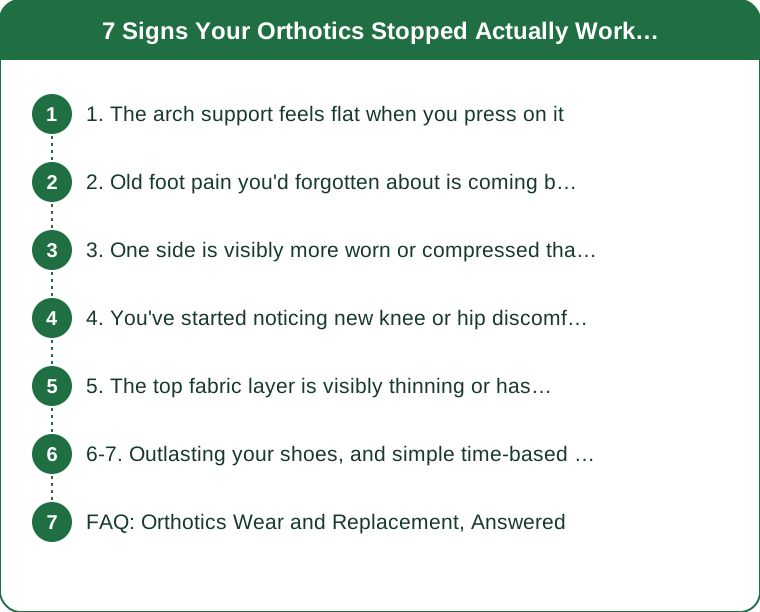
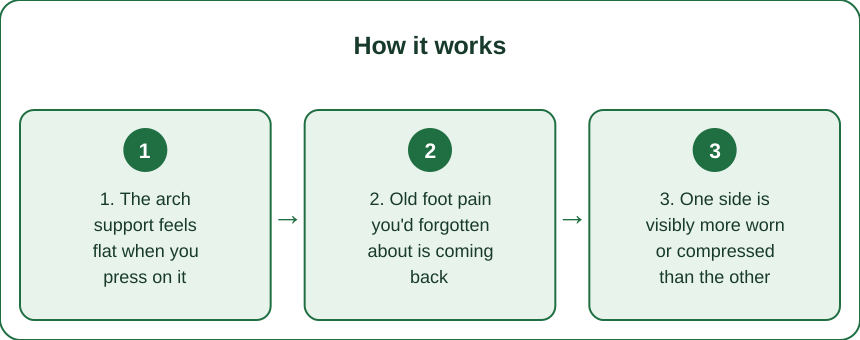
1. The arch support feels flat when you press on it
Fresh orthotic arch support has genuine resistance when pressed with a thumb; a support that compresses flat with light pressure and doesn’t spring back has lost the structural material that was doing the actual work, even if the overall shape still looks fine from the outside.
2. Old foot pain you’d forgotten about is coming back
Orthotics are usually prescribed or chosen to address a specific issue — plantar fasciitis, overpronation, heel pain. The return of that original symptom, even mildly, after months of it being resolved is one of the most reliable signals that the support has degraded below the threshold that was actually managing it.
3. One side is visibly more worn or compressed than the other
Uneven compression between the left and right orthotic means one side is providing meaningfully less support than the other, which can itself introduce new gait imbalance issues beyond just reduced overall support.

4. You’ve started noticing new knee or hip discomfort
Because orthotics affect alignment up the entire kinetic chain, degraded support can shift how force travels through the knees and hips, and new discomfort in those joints — without any other clear cause — is worth checking against orthotic wear before assuming it’s unrelated.
5. The top fabric layer is visibly thinning or has holes
This one’s visible but easy to dismiss as cosmetic — in reality, thinning top fabric usually means the cushioning layer directly beneath it is compressing at the same rate, so visible fabric wear is a reasonable proxy for support loss underneath, not just an appearance issue.
6-7. Outlasting your shoes, and simple time-based wear
They’ve outlasted the shoes you originally bought them for. Orthotics are generally designed around a specific shoe’s volume and shape; moving a pair of orthotics between two or three shoe generations is common practice but does mean the fit and support relationship has likely shifted from the original intended setup.
It’s simply been over a year of regular daily wear. Even without an obvious symptom, most orthotic materials break down meaningfully within 12-24 months of daily wear depending on material and activity level — treating replacement as time-based rather than waiting for a clear failure sign catches the gradual, hard-to-notice decline before symptoms return.
FAQ: Orthotics Wear and Replacement, Answered
Can custom orthotics be resoled or refurbished instead of fully replaced?
Some custom orthotics can have the top cover replaced while keeping the structural shell, which is worth asking the original provider about before assuming full replacement is the only option.
Do over-the-counter orthotics wear out faster than custom ones?
Generally yes — over-the-counter orthotics often use less durable materials and typically need replacement closer to the 6-12 month mark with regular wear, compared to 1-2 years for many custom options.
Is it worth getting feet reassessed before buying replacement orthotics?
Yes, especially if it’s been more than a couple of years since the original fitting — foot shape and needs can shift over time, and a new assessment sometimes reveals the original prescription no longer matches current needs.
TL;DR:
- Flattened arch support that doesn’t spring back under pressure is a clear failure sign
- Returning foot, knee, or hip discomfort often traces back to degraded support, not a new issue
- Uneven wear between the two sides can itself introduce new imbalance
- Time-based replacement (1-2 years) catches decline that symptoms alone miss
Orthotics fail quietly — checking the arch by hand every few months catches it before your feet do.
Keep Reading
This article is for general informational purposes only and is not medical advice. Always consult a qualified health professional for guidance specific to you.