7 Signs Your Shoes Are Quietly Wrecking Your Feet Without You Noticing
Quick Answer: Uneven sole wear, new calluses in unusual spots, toe numbness after wearing, and needing to “break in” the same pair repeatedly are among the clearest early signs a shoe is causing gradual foot damage — none of them require pain to already be present.
Foot problems from bad shoes rarely announce themselves with sudden pain — they build slowly through small, easy-to-dismiss signals that most people don’t connect to their footwear until the problem is well established.
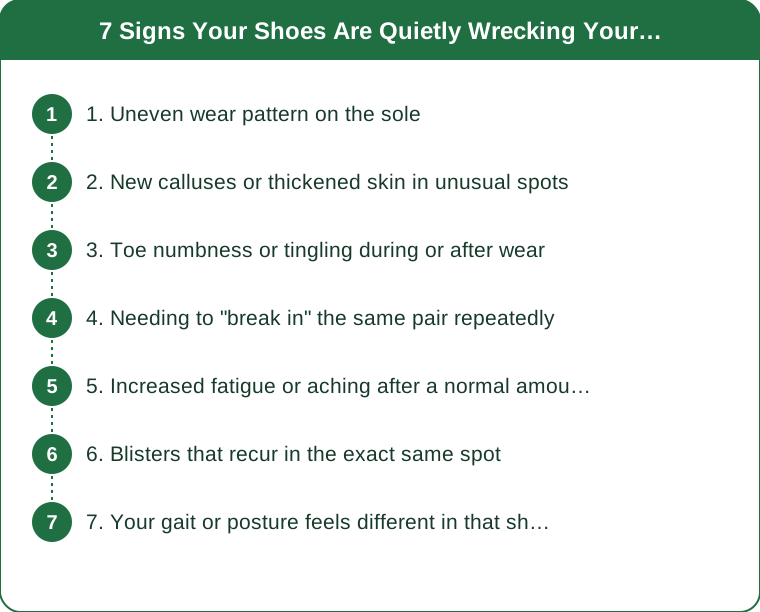
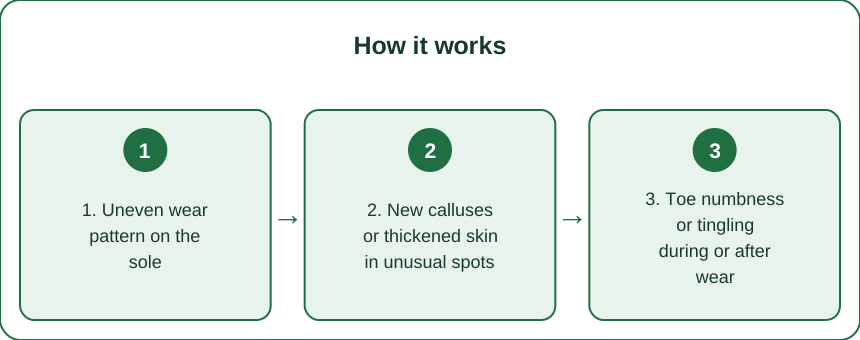
1. Uneven wear pattern on the sole
Check the outsole regularly — wear concentrated heavily on one edge (inner or outer) rather than evenly across the ball of the foot indicates the shoe isn’t supporting your natural gait, and it’s actively reinforcing whatever imbalance is causing that uneven wear with every step.
2. New calluses or thickened skin in unusual spots
A callus forming somewhere it never did before — the side of a toe, a spot on the heel — is your skin’s direct response to new friction or pressure, meaning the shoe is creating contact stress in a location your foot isn’t built to absorb it well.
3. Toe numbness or tingling during or after wear
This often points to a toe box that’s too narrow or too shallow, compressing nerves between the toes — a shoe genuinely built for your foot shape shouldn’t produce numbness even after hours of wear.

4. Needing to “break in” the same pair repeatedly
A shoe that never quite stops feeling stiff or uncomfortable, even after normal break-in time (typically 1-2 weeks of regular wear), usually means the shoe’s shape doesn’t match your foot’s shape closely enough to ever fully resolve, rather than needing more time.
5. Increased fatigue or aching after a normal amount of walking
If a walking distance that used to feel easy now leaves your feet noticeably more tired, and the shoe hasn’t changed, that fatigue can indicate the shoe’s cushioning or support has broken down — most athletic shoes lose meaningful cushioning after 300-500 miles, even without visible damage.
6. Blisters that recur in the exact same spot
A one-time blister can be a fluke; a blister that keeps forming in the identical location across multiple wears is a reliable sign of a specific friction point in the shoe’s construction that isn’t going to resolve on its own.
7. Your gait or posture feels different in that shoe versus others
If you notice yourself walking differently — more heavily on one side, a shortened stride — specifically in one pair, your body may be unconsciously compensating for something in that shoe’s fit or structure, which is worth paying attention to before it becomes a bigger compensation pattern.
What should you actually do if you notice several of these signs? Retire the shoe from regular use rather than pushing through, and consider having your foot measured and gait assessed at a specialty running or shoe store if the pattern recurs across multiple pairs — a recurring pattern across different shoes points toward a fit or gait issue worth professional input, not just a bad single pair. This is general information, not medical advice.
TL;DR:
- Uneven sole wear and new calluses are early, easy-to-miss signs of shoe-related foot stress
- Toe numbness and repeated breaking-in that never resolves point to a poor shape match
- Recurring fatigue or blisters in the same spot indicate a specific, fixable problem
- A pattern across multiple shoe pairs is worth a professional fit or gait assessment
None of these signs require pain to already be happening — catching them early is what actually prevents the bigger problem down the line.
Keep Reading
This article is for general informational purposes only and is not medical advice. Always consult a qualified health professional for guidance specific to you.