7 Signs Your Toenails Are Quietly Flagging a Bigger Foot Health Issue
Toenails don’t get much attention until something’s visibly wrong, but a lot of foot problems show up there first, well before they become the kind of pain that stops a workout.

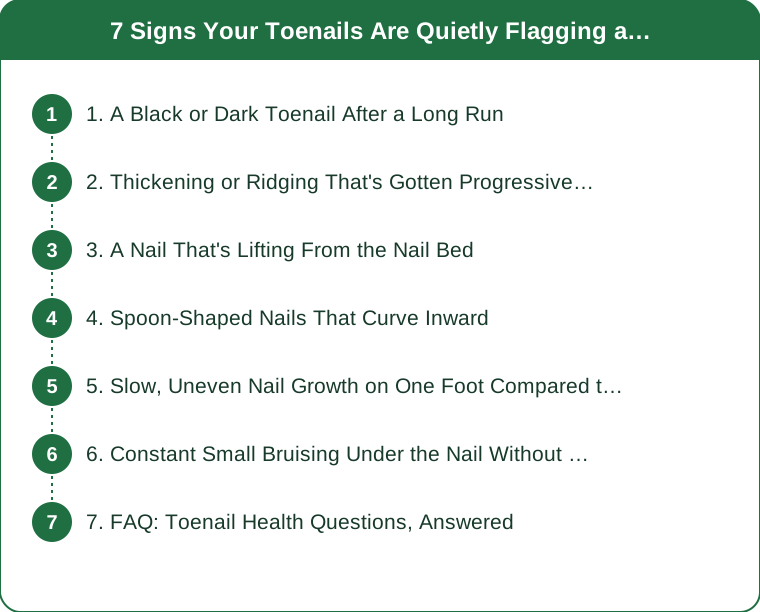
1. A Black or Dark Toenail After a Long Run
This usually signals repeated impact trauma against the front of a shoe — commonly from a shoe that’s slightly too short or laces too loose, allowing the foot to slide forward on downhill sections or long distances. It’s often harmless on its own, but repeated occurrences point to a sizing or lacing fix, not just something to shrug off as normal running wear.
2. Thickening or Ridging That’s Gotten Progressively Worse
Some ridging is normal with age, but noticeably increasing thickness over months, especially combined with a yellowish tint, is a common early sign of a fungal infection that’s easier to treat caught early than after it’s well established. This is worth a look from a podiatrist rather than waiting to see if it resolves on its own.
3. A Nail That’s Lifting From the Nail Bed
Partial lifting can result from trauma (the same impact issue as a black nail) or, less commonly, from fungal infection or an allergic reaction to nail polish or gel manicures. If it’s not clearly tied to a specific impact event, it’s worth having checked rather than assumed.

4. Spoon-Shaped Nails That Curve Inward
This specific shape change, called koilonychia, is a recognized sign sometimes associated with iron deficiency. It’s not a guaranteed diagnosis on its own, but combined with fatigue or other symptoms, it’s a reasonable prompt to mention to a doctor rather than dismiss as a cosmetic quirk.
5. Slow, Uneven Nail Growth on One Foot Compared to the Other
A significant, sustained growth-rate difference between feet can sometimes point to a circulation difference between the two limbs, worth mentioning at a checkup particularly if paired with other symptoms like temperature difference or numbness in that foot specifically.
6. Constant Small Bruising Under the Nail Without a Clear Cause
Occasional bruising from a stubbed toe or an ill-fitting shoe is normal; recurring bruising under a nail without an obvious impact cause is less common and, while often still benign, is worth a professional look to rule out anything more concerning, particularly if it’s isolated to a single nail that keeps recurring.
7. FAQ: Toenail Health Questions, Answered
How do I know if a black toenail is from a shoe issue versus something else?
If it consistently follows long runs or hikes and resolves as the nail grows out, a shoe fit issue is the most likely cause — persistent or recurring dark nails without a clear activity trigger deserve a closer look.
Can nail polish make it harder to catch these signs early?
Yes — regular polish or gel manicures can hide early color or texture changes, so periodically going polish-free lets you actually check what’s happening underneath.
When should I actually see a podiatrist versus just monitoring?
Any change that’s worsening over weeks, painful, or not clearly tied to an obvious cause (like recent trauma) is worth a professional look rather than a wait-and-see approach. This is general information, not medical advice.
TL;DR:
- Black toenails after long runs usually point to a shoe fit or lacing issue
- Progressive thickening and yellowing can signal an early fungal infection
- Spoon-shaped nails are sometimes linked to iron deficiency
- Persistent, unexplained changes are worth a podiatrist visit, not just watching and waiting
Your toenails are a small, easy-to-check window into bigger foot and body health signals — worth a real look now and then, not just a coat of polish.
Keep Reading
This article is for general informational purposes only and is not medical advice. Always consult a qualified health professional for guidance specific to you.