7 Signs You're Actually in the Wrong Shoe Size Right Now (Even If You've Worn It for Years)
Quick Answer: Seven reliable signs point to a wrong shoe size even in shoes you’ve worn for years — toe numbness, black toenails after activity, heel slipping, visible bulging at the widest part of the foot, blisters in new spots, needing to loosen laces significantly, and a size that differs between your two feet — and any of these is worth acting on rather than assuming the shoe just needs “breaking in.”
Here’s each sign explained, since feet genuinely do change size and shape gradually over years, even into adulthood.

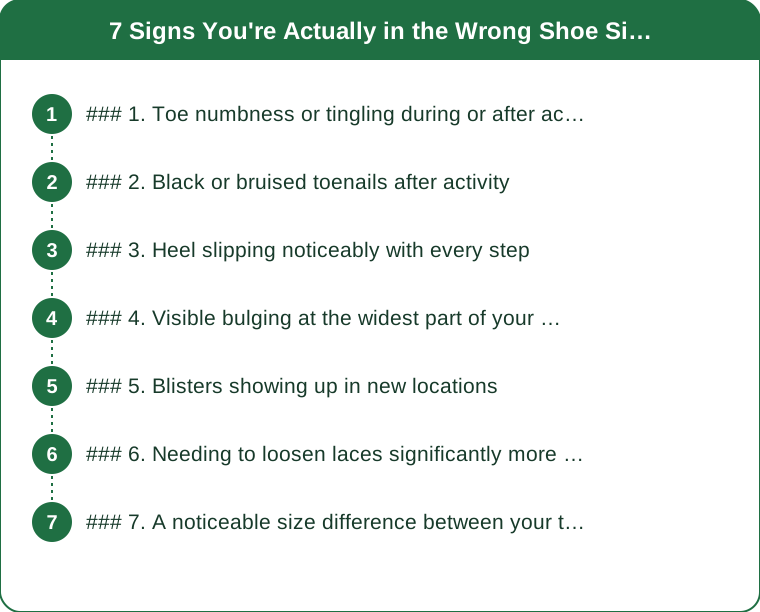
### 1. Toe numbness or tingling during or after activity
Numbness or tingling in the toes, especially during longer walks or runs, often means the toe box is too narrow or too short, compressing nerves. This is one of the clearest signals a shoe no longer fits properly, regardless of how long you’ve worn that size in the past.
### 2. Black or bruised toenails after activity
Toenails bruising or blackening after a run or long walk is a classic sign your foot is sliding forward and jamming toes into the front of the shoe, usually meaning the shoe is too short or the fit through the midfoot is too loose, letting the foot slide forward on impact.
### 3. Heel slipping noticeably with every step
Consistent heel slipping usually means the shoe is too big overall or too wide through the heel specifically, even if the toe box fits fine — heel slip is a common and often overlooked sign of poor overall shoe fit, separate from length.

### 4. Visible bulging at the widest part of your foot
If the upper fabric or leather visibly bulges or strains at the widest part of your foot (usually near the base of the big and little toes), the shoe is too narrow for your foot’s current width — width needs can change with age, weight fluctuation, and even pregnancy, independent of length.
### 5. Blisters showing up in new locations
Blisters appearing in spots that never used to be a problem in the same shoe model or size are a strong sign your foot shape has shifted slightly, changing the friction points, even if the shoe itself hasn’t changed.
### 6. Needing to loosen laces significantly more than you used to
If you find yourself consistently loosening laces more than in the past to get a comfortable fit, this often means the shoe’s volume no longer matches your foot’s current shape — a gradual change easy to miss since it happens slowly, lace-adjustment by lace-adjustment.
### 7. A noticeable size difference between your two feet
Most people have a slight size difference between feet, but if this gap has grown more noticeable over time, well-fitting shoes for one foot may be quietly too small or too large for the other — sizing to the larger foot and using an insert or thicker sock on the smaller side is a common, practical fix.
TL;DR:
- Toe numbness, black toenails, and heel slipping are common signs of a size or fit that no longer works
- Bulging fabric and new blister locations point to foot shape or width changes over time
- Loosening laces more than before signals a volume mismatch, not just a length issue
- Feet genuinely change size and shape with age, weight change, and pregnancy
Getting refit every couple of years, even in a size you’ve “always worn,” catches these changes before they cause real discomfort or injury.
Keep Reading
This article is for general informational purposes only and is not medical advice. Always consult a qualified health professional for guidance specific to you.