Barefoot O'Clock: Why Your Feet Need Shoe-Free Hours
Quick Answer: Go barefoot at home by default and add about 10 minutes a day of deliberate barefoot time on varied surfaces — grass, sand, smooth stone. Add toe spreads (10 holds) and big-toe lifts a few times a week. Build up gradually over 6–8 weeks; feet that have been supported for decades don’t adapt in a weekend. If you have diabetes or reduced foot sensation, keep shoes on and follow your clinician’s advice.
Each foot contains 26 bones, 33 joints, and more than 100 muscles, tendons, and ligaments. It’s a suspension system of genuine sophistication.
And it spends roughly sixteen hours a day inside a cushioned container that does most of its job for it, which is a bit like hiring a structural engineer and then propping the building up with scaffolding anyway.
What Happens to Feet That Live in Shoes?
Two things, and they compound.
The muscles get less work. Arch support, cushioning, and rigid soles absorb forces your intrinsic foot muscles evolved to handle. Muscles that aren’t asked to do a job gradually stop being able to do it — the same principle as any other part of the body, just less visible because it’s happening inside a shoe.
The sensory input gets muffled. Your feet are dense with mechanoreceptors that feed your brain constant information about surface, angle, and pressure. That data drives balance and micro-adjustments in your gait. Thick cushioning filters most of it out, and the system gets less responsive from lack of practice.
The downstream consequence is the part that actually shows up in a physio’s office: weak feet outsource their work upward. Knees, hips, and lower backs end up compensating for a foundation that isn’t contributing much. The complaint arrives years later and in a different location than the cause.
Barefoot time is essentially a re-employment scheme for muscles that took early retirement.
How Much Barefoot Time Do You Actually Need?
Less than you’d think, done consistently.
Barefoot at home by default. This is the highest-value change and it requires no effort at all. Take your shoes off at the door. In winter, grippy socks count as parole — you want the foot flexing, not necessarily the skin exposed.
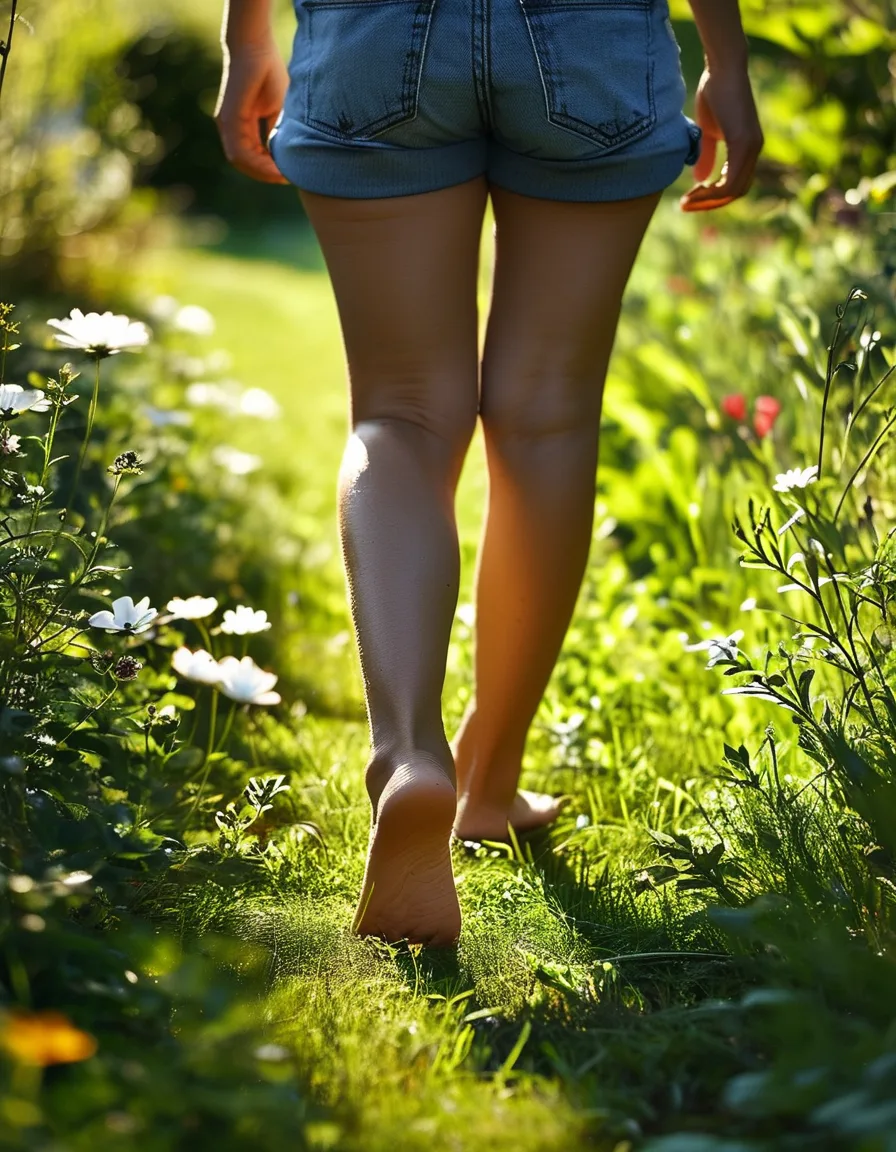
Ten deliberate minutes a day on varied surfaces. This is where the sensory benefit lives. Grass, sand, smooth stone, a pebbled path, even the ridged texture of a doormat. Varied ground makes your foot do something different with every step, which is exactly the input that’s been missing.
Walk slowly and pay attention. Ten mindful minutes on grass beats twenty distracted ones. You’re trying to wake up sensation that’s been muted for decades, and that requires actually noticing it.
Build gradually. Start with 5 minutes and add 2–3 minutes a week. If your calves or arches are sore the next morning, hold at your current level rather than progressing.

How Do You Get Your Toes to Spread Again?
Decades of tapered shoes teach toes to huddle together. Undoing that takes deliberate counter-programming, and it’s worth doing because a wider base balances better — that’s not a metaphor, it’s just physics.
Toe spreads. Sit or stand, actively fan your toes apart, hold for 5 seconds, release. Ten repetitions. Most people can’t do this at all at first, which is itself informative.
Big-toe lifts. Keep all four small toes on the ground, lift only the big toe. Then reverse: big toe down, four toes up. This is much harder than it sounds and becomes weirdly competitive if anyone else in the house tries it.
Toe spacers during evening TV. Silicone spacers worn for 20–30 minutes while sitting. Start with 10 minutes; they get uncomfortable fast if you overdo it on day one.
Towel scrunches. Lay a towel flat, use your toes to drag it toward you. Two sets of ten. Boring, effective, does more for arch strength than most dedicated foot exercises.
Aim for a few sessions a week rather than daily heroics. This is a slow adaptation and pushing it produces sore feet, not faster progress.
What Nobody Tells You About Going Barefoot
The transition injuries are real and well documented. The barefoot running boom of the early 2010s produced a wave of metatarsal stress fractures in people who switched over too fast. Feet adapt, but bone remodels on a timescale of months, not weeks. Anyone telling you to throw out your cushioned shoes on Monday is giving you a shortcut to a podiatrist.
Surfaces matter more than duration. Ten minutes on grass gives your feet more varied input than an hour on a flat wooden floor. Seek out texture, not mileage.
Your calves will complain first. Barefoot walking shifts load toward the calf and Achilles. Mild soreness in week one is normal; sharp pain or pain that persists past 48 hours isn’t.
Minimalist shoes are a middle path, not barefoot. A wide toe box and a flexible zero-drop sole gets you most of the benefit with protection. For most people this is a more practical target than actual barefoot time outdoors.
Foot strength doesn’t fix everything. If you have genuine structural issues — a rigid flat foot, significant bunion deformity, or plantar fasciitis that’s been going for months — barefoot time may help or may aggravate it. That’s a conversation for a physiotherapist or podiatrist, not a blog post.
Who Should Not Do This?
Worth being direct about, because feet are one of the areas where the standard advice genuinely doesn’t apply to everyone.
If you have diabetes or any condition affecting foot sensation, keep shoes on unless your clinician says otherwise. Reduced sensation means you won’t feel a cut or a blister forming, and foot wounds in diabetic patients are a serious clinical problem, not a minor one.
Also check with a professional first if you have peripheral neuropathy from any cause, a history of foot ulcers, significant circulatory problems, or advanced osteoarthritis in the foot or ankle.
See a professional if you get sharp pain rather than muscular soreness, pain that doesn’t settle within two days, numbness or tingling, or any swelling that appears after starting. For everyone else without those conditions: the grass is open.
Frequently Asked Questions
How long before I notice a difference?
Sensory changes — feeling more connected to the ground, better balance — often show up within two to three weeks. Actual strength changes in the intrinsic foot muscles take longer, typically 8–12 weeks of consistent work. If you’re doing this to address a specific problem, give it a full three months before judging.
Are minimalist shoes as good as being barefoot?
Close, and considerably more practical. A shoe with a wide toe box, a flexible sole, and zero heel-to-toe drop lets your foot move and flex nearly normally while protecting you from glass and gravel. The main thing you lose is the fine sensory input from varied ground texture — which is exactly why the 10 minutes of genuine barefoot time on grass still earns its place.
Can barefoot time help with plantar fasciitis?
Sometimes, and sometimes not — it depends on the stage and cause. Gentle foot strengthening is often part of rehab, but walking barefoot on hard floors during an acute flare frequently makes it worse. If you have ongoing heel pain, get it assessed before adding barefoot time rather than experimenting on it yourself.
TL;DR:
- Shoes do your feet’s stabilizing work; unused muscles weaken and the load shifts to knees and hips
- Barefoot at home by default — the single easiest high-value change
- Add ~10 mindful minutes a day on varied surfaces: grass, sand, stone
- Toe work a few times weekly: spreads (10 holds), big-toe lifts, towel scrunches
- Transition over 6–8 weeks. Rushing it causes stress fractures — this is documented, not theoretical
- Diabetics and anyone with reduced foot sensation: keep shoes on and follow your clinician
The suspension system just needed its shifts back. Employment resumes tonight, on the kitchen floor.
Keep Reading
This article is for general informational purposes only and is not medical advice. Always consult a qualified health professional for guidance specific to you.