Your Feet After a Day in Heels — the 10-Minute Recovery That Actually Works
Quick Answer: Elevate your feet for 5 minutes, roll each arch over a ball or frozen water bottle for 2 minutes per side, then do 10 calf raises off a step to restore range of motion. Do this within an hour of taking the heels off for the best relief.
You survived the wedding, the work event, the six hours on your feet. Now your arches throb and your calves feel a size too small. That tightness isn’t just soreness — heels shorten your Achilles tendon and calf muscle with every hour you wear them, and skipping recovery just carries it into tomorrow.

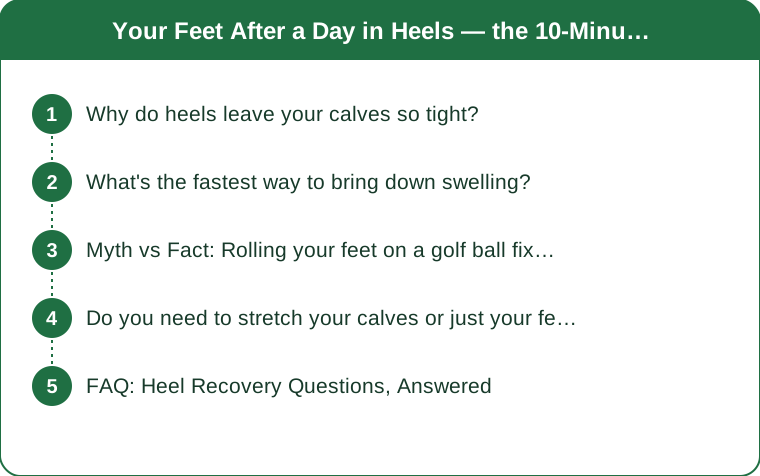
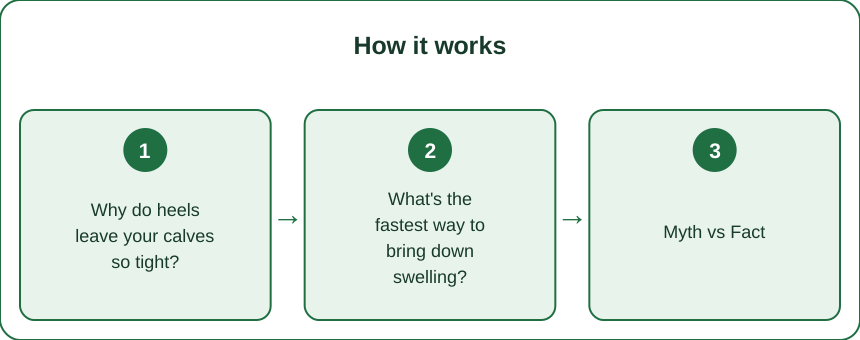
Why do heels leave your calves so tight?
Heels tilt your foot forward, which puts your calf and Achilles tendon in a shortened position for hours at a stretch. Muscles adapt to whatever position they sit in most — so after a long day, that shortened range becomes the new normal until you actively stretch it back out.
The fix is a calf raise into a full stretch, not just a static hold. Stand on a step, drop your heels below the edge, then rise onto your toes for 10 reps. This restores full range in both directions instead of just pulling on a tight muscle.
What’s the fastest way to bring down swelling?
Elevate your feet above heart level for 5 minutes — a wall works fine, no equipment needed. Gravity drains the fluid pooling that heels’ angle traps in your forefoot.
Follow it with contrast: 30 seconds of a cold pack, 30 seconds off, repeated 3 times. This isn’t just numbing — it prompts the small blood vessels in your foot to alternately constrict and dilate, which moves fluid out faster than ice alone.

Myth vs Fact: Rolling your feet on a golf ball fixes everything
Myth: Any hard ball under your arch undoes a day in heels.
Fact: A golf ball is too small and firm for tired, inflamed tissue — it can dig into a pressure point and leave you sorer. Use a softer ball (like a lacrosse or tennis ball) or a frozen water bottle, which combines the roll with cold therapy. Roll slowly, about 2 inches per second, for 90 seconds to 2 minutes per foot.
Do you need to stretch your calves or just your feet?
Both, in that order. Start with the calf raise off a step described above, then move to your foot: seated, hook a towel around your toes and pull gently toward you for 30 seconds, 3 times per foot.
Skipping the calf stretch and going straight to the foot is the most common mistake — it treats the symptom (sore arch) without addressing the cause (shortened calf), so the tightness comes right back by the next time you wear flats and try to run for a bus.
FAQ: Heel Recovery Questions, Answered
How long does heel soreness usually last?
Mild soreness from an occasional heel day usually clears within 24 hours with basic recovery. If pain lasts more than 2–3 days or you notice sharp pain in one spot, that’s worth a podiatrist visit rather than more rolling.
Should you ice or heat sore feet after heels?
Ice first if there’s visible swelling — heat can make inflammation worse in the first 24 hours. After that window, warmth (like a warm foot soak) can help loosen tight calves.
Can wearing heels regularly cause permanent damage?
Regular heel wear can shorten the Achilles tendon over time and contribute to bunions or hammertoes in susceptible feet. This is general information, not medical advice — see a podiatrist if you’re a frequent heel-wearer with ongoing pain.
TL;DR:
- Elevate for 5 minutes, then roll each arch 90 seconds–2 minutes with a soft ball or frozen bottle
- Calf raises off a step matter as much as foot rolling — heels shorten your Achilles all day
- Contrast (cold on/off) beats plain icing for pooled swelling
- Recurring sharp pain after recovery is a podiatrist question, not a rolling problem
Keep a lacrosse ball in your desk drawer if heels are a regular part of your week — the 10 minutes right after you change shoes matters more than anything you do the next morning.
Keep Reading
This article is for general informational purposes only and is not medical advice. Always consult a qualified health professional for guidance specific to you.