7 Signs Your Feet Are Aging Faster Than the Rest of You — and What Actually Slows It Down
Quick Answer: Feet often show wear-and-tear signs — thinning fat pads, widening, reduced arch flexibility — years before other joints do, largely because they absorb multiples of body weight in impact with every step. Daily foot-specific stretching and rotating shoe types are the two changes with the most evidence behind them for slowing it down.
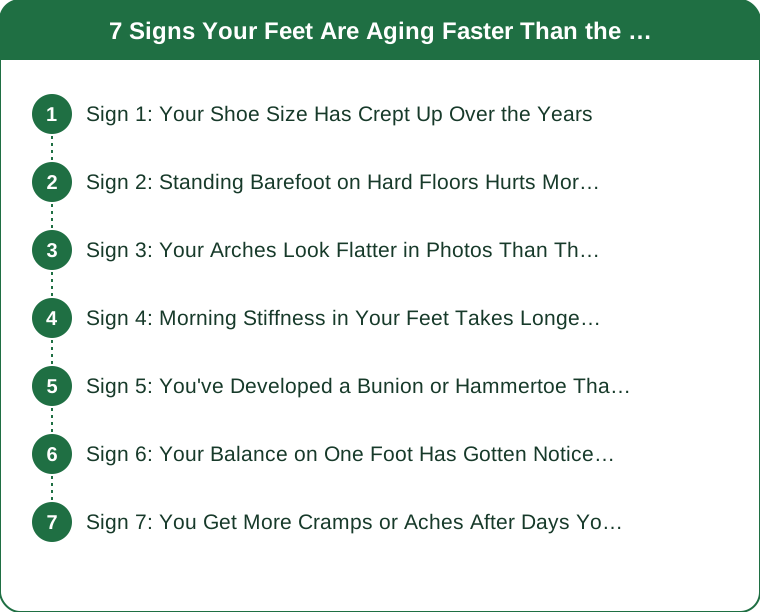
Sign 1: Your Shoe Size Has Crept Up Over the Years
Feet widen and lengthen gradually with age as the ligaments supporting the arch lose some tautness — a half-size to full-size increase over a decade is common and isn’t just “shoes running differently” between brands.
Sign 2: Standing Barefoot on Hard Floors Hurts More Than It Used To
The fat pad under the heel and ball of the foot thins over time, providing less natural cushioning — this is one of the more consistent aging markers and is a big reason older feet feel harder floors more acutely than younger ones.
Sign 3: Your Arches Look Flatter in Photos Than They Did Years Ago
Ligament laxity increases gradually, allowing the arch to drop slightly even without any specific injury — this is a slow structural change rather than a sudden one, which is why it’s easy to miss until you compare old photos.
Sign 4: Morning Stiffness in Your Feet Takes Longer to Work Out
Reduced circulation and fascia elasticity mean the first several steps out of bed feel stiffer and take longer to loosen than they used to — five minutes of stiffness becoming fifteen minutes over the years is a real, trackable pattern.
Sign 5: You’ve Developed a Bunion or Hammertoe That Wasn’t There Before
Toe joint changes accumulate with decades of footwear pressure and natural ligament loosening, and genetics plus years of narrow or high-heeled shoes both compound the effect — this is one of the more visible structural aging signs on feet.
Sign 6: Your Balance on One Foot Has Gotten Noticeably Worse
Proprioception (the nerve feedback that tells your brain where your foot is) declines gradually, and feet are a major source of that balance feedback — struggling to stand on one leg for 20+ seconds where it used to be easy is a meaningful marker worth testing occasionally.

Sign 7: You Get More Cramps or Aches After Days You Used to Handle Easily
Reduced elasticity in the plantar fascia and smaller intrinsic foot muscles means a long walking day that used to be routine now leaves your feet aching by evening — this is often one of the earlier signs people notice, well before other changes.
What actually slows this down: daily foot and ankle mobility work (5-10 minutes), rotating between at least two shoe types through the week, and going barefoot on safe surfaces periodically to keep the small stabilizing muscles engaged rather than always propped up by cushioned soles.
FAQ: Is foot aging inevitable or can it really be slowed?
Some structural change is inevitable, but the rate and severity are meaningfully influenced by footwear choices and regular mobility work — it’s not purely genetic fate.
At what age do these signs typically start showing up?
Many people notice the first signs (shoe size creep, morning stiffness) in their late 30s to 40s, though timeline varies a lot by activity history and footwear habits.
Does going barefoot more actually help foot aging?
Moderate, safe barefoot time helps maintain the small stabilizing muscles in the foot, though it should be introduced gradually rather than all at once to avoid overuse.
TL;DR:
- Shoe size creep, flatter arches, and thinning heel padding are real, trackable aging signs
- Morning stiffness taking longer to work out and worse single-leg balance are earlier markers than most people expect
- Daily foot mobility work and shoe rotation are the two changes with the most support behind them
- Some change is inevitable, but the rate is meaningfully within your control
Feet age quietly for years before anything hurts enough to notice — a few minutes of attention daily goes further than most people assume.
Keep Reading
This article is for general informational purposes only and is not medical advice. Always consult a qualified health professional for guidance specific to you.