Cute Sandals, Angry Feet: Surviving Sandal Season Comfortably
Quick Answer: Sandal-season foot pain usually comes from switching suddenly from supportive sneakers to flat, unsupported sandals while also walking more than usual on vacation. The fix is owning two sandal tiers — a pretty pair and a genuinely supportive pair — and transitioning gradually instead of going flat-strap-only overnight.
Every July, feet across the hemisphere file the same complaint: a sudden switch from structured sneakers to two thin straps and a prayer, combined with vacation-level walking, adds up to arch aches and heel grumbles by mid-month. Sandal season is completely survivable — it just runs on a few shopping rules most people never learned.

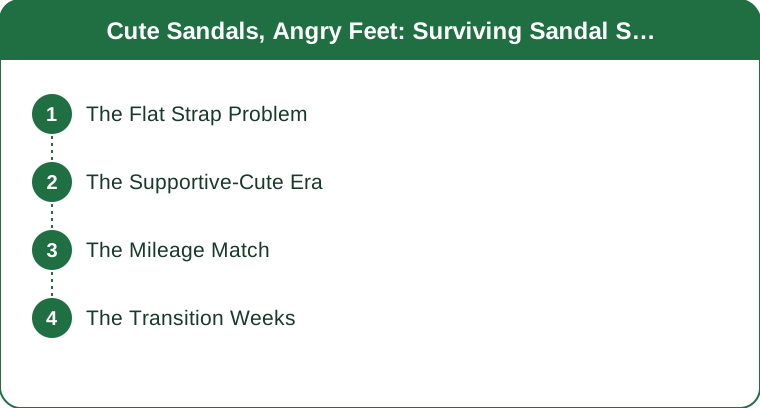
Why do sandals hurt more than sneakers?
Classic fashion sandals offer roughly the structural support of a postcard — essentially zero arch support, zero cushioning, with straps that exist mostly for decoration rather than function. For a short walk from the car to brunch, that’s genuinely fine. For a vacation day that racks up well over 10,000 steps, it’s a documented regret waiting to happen by dinnertime.
Your feet are used to sneakers doing a lot of quiet structural work — cushioning impact, supporting your arch, holding your heel in place. Swap that out overnight for flat straps and suddenly your feet are doing all of that stabilizing work themselves, which is exactly where the aches come from.
What should you look for in a supportive sandal?
The good news: the comfort-sandal category has gotten legitimately stylish in recent years, so “supportive” and “cute” aren’t opposites anymore. When you’re shopping, test for a few specific things right in the store:
- Topography in the footbed — you should be able to feel a raised arch contour under your foot, not a flat slab.
- A heel that stays put — walk a few steps in the store; your heel shouldn’t slide off the back of the sandal mid-stride.
- Some give in the sole — a sole with zero flex tends to fight your foot’s natural motion instead of working with it.
If a sandal passes all three tests, it’s probably built for actual walking, not just standing around looking good in photos.

Should you own more than one pair of sandals?
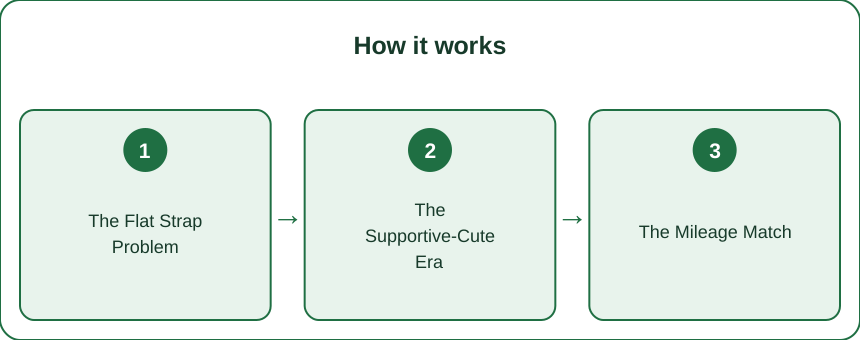
Yes — and this is really the whole strategy in one sentence: own two tiers of sandals. One pretty, minimal pair for low-step occasions (dinner, a short walk, sitting at a patio table), and one genuinely supportive pair for real distance.
When you’re packing for vacation, the supportive pair gets the suitcase spot, not the pretty one. Cobblestone streets, museum floors, and full days of sightseeing don’t care how good a sandal looks — they only care whether your arch is supported by hour six.
How do you ease into sandal season without hurting your feet?
Don’t switch cold-turkey from sneakers to sandals for every outing. A gradual transition gives your feet time to adjust:
- Alternate with sneakers for the first couple of weeks of sandal weather instead of going all-sandals overnight.
- Stretch your calves after flat-shoe days — flat sandals quietly shorten your calf muscles over a day of wear, and stretching counteracts that.
- Roll your arches with a massage ball in the evening if they’ve already been complaining, which helps ease built-up tension.
July feet earn their comfort accommodations. There’s no need to tough it out on principle.
Myth vs Fact: Sandal Season Foot Pain
Myth: Flip-flops and flat sandals are basically harmless if you only wear them occasionally. Fact: Even occasional wear can cause discomfort if it’s paired with unusually high step counts, like a vacation day — mileage matters as much as frequency.
Myth: Expensive sandals are automatically more supportive. Fact: Price doesn’t guarantee arch support or a secure heel — always test the footbed and fit yourself rather than assuming a higher price tag means better structure.
Myth: Foot pain from sandals always goes away on its own once summer ends. Fact: Usually, yes — but persistent pain, sharp heel pain, or pain that doesn’t ease up with rest and better footwear is worth having a podiatrist look at, rather than waiting it out.
FAQ
Why do my feet hurt more on vacation than at home, even in the same sandals?
Vacation days typically involve far more walking than a normal day at home, so the same unsupportive sandals get exposed over many more steps and hours. The sandals aren’t necessarily worse — you’re just asking more of them.
How can I tell if a sandal has enough arch support before buying it?
Press your thumb into the footbed and feel for a raised contour under where your arch sits — a flat, uniform surface means minimal support. Walking a few steps in-store to check that your heel doesn’t slide is the other key test.
Is it bad to wear flat sandals every day in summer?
Occasional wear is generally fine, but daily wear with high step counts can contribute to arch and heel discomfort over time. Rotating with a more supportive pair, especially on high-mileage days, helps prevent that buildup.
TL;DR
- Sandal pain usually comes from combining flat, unsupported footwear with sudden high step counts.
- Test sandals for footbed topography, a secure heel, and some sole flexibility before buying.
- Keep two tiers: a pretty low-mileage pair and a genuinely supportive high-mileage pair — pack the supportive one for vacations.
- Transition gradually by alternating with sneakers, and stretch calves after flat-shoe days.
- Persistent or sharp foot pain is worth a podiatrist visit rather than waiting it out.
Keep Reading
This article is for general informational purposes only and is not medical advice. Always consult a qualified health professional for guidance specific to you.