7 Things Nobody Tells You Before You Try Toe Spacers
Quick Answer: Toe spacers work best as a short, consistent daily habit (15-30 minutes to start) rather than an all-day wear, and most of the reported benefits — better toe splay, reduced cramping — take 2-4 weeks of regular use to show up.
Toe spacers went from niche foot-health tool to genuinely popular fast, and most of what circulates online skips the practical details.

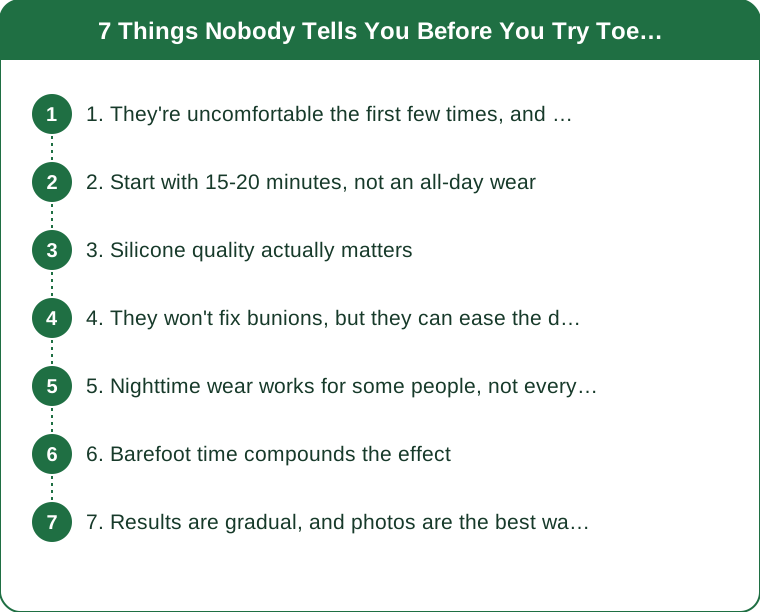
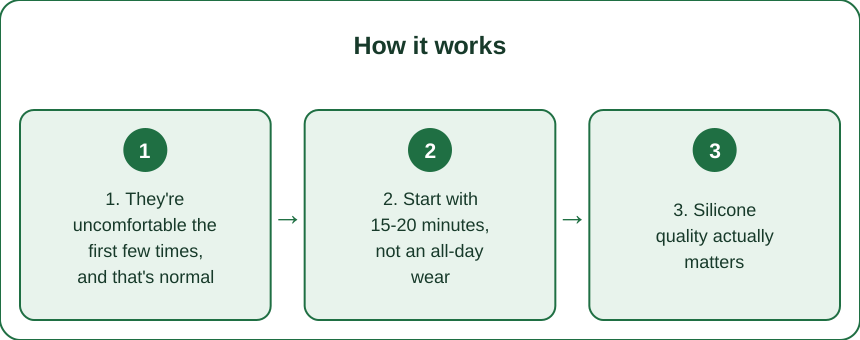
1. They’re uncomfortable the first few times, and that’s normal
If your toes have spent years crammed into narrow shoes, the first few sessions with spacers will feel tight and strange, not relaxing. That discomfort is your toes re-learning a natural spread, not a sign you’re doing it wrong.
Most people find the sensation eases noticeably after the first week of short daily sessions — jumping straight to an hour on day one is the main reason people quit early.
2. Start with 15-20 minutes, not an all-day wear
Wearing spacers while standing or walking on day one is a common mistake that leads to soreness. Start seated, for 15-20 minutes, and only extend duration once that feels easy.
Some people eventually wear them for a couple hours while reading or working from a desk, but that’s a months-later stage, not a starting point.
3. Silicone quality actually matters
Cheap, stiff silicone spacers can dig into the skin between toes and cause irritation rather than a gentle stretch. Medical-grade, softer silicone with a contoured shape between each toe is worth the few extra dollars over the bargain versions.

4. They won’t fix bunions, but they can ease the discomfort
Toe spacers don’t reverse an existing bunion’s bone structure — that’s a common overclaim. What they can do is temporarily reduce the pressure and cramping that bunions cause, which is why podiatrists sometimes recommend them alongside, not instead of, other treatment.
5. Nighttime wear works for some people, not everyone
Sleeping in toe spacers is popular for a reason — no weight-bearing pressure, longer duration. But side sleepers often find them uncomfortable against the mattress or a partner’s leg. If daytime sessions work fine but night wear feels off, there’s no need to force it.
6. Barefoot time compounds the effect
Spacers stretch toes passively; barefoot walking strengthens the small muscles that hold that spread. Pairing short spacer sessions with barefoot time on safe surfaces gets better results than spacers alone.
7. Results are gradual, and photos are the best way to track them
Because toe splay changes slowly, it’s easy to feel like nothing is happening. A photo of your bare feet every two weeks, feet flat and relaxed, shows progress that day-to-day comparison misses.
TL;DR:
- Expect discomfort the first few sessions — that’s normal adjustment, not a sign of harm
- Start with 15-20 minutes seated, build up gradually
- Softer, medical-grade silicone spacers reduce irritation
- Track progress with photos every two weeks since daily change is hard to notice
Give it two consistent weeks before deciding whether they’re worth keeping in your routine.
Keep Reading
This article is for general informational purposes only and is not medical advice. Always consult a qualified health professional for guidance specific to you.