Why Your Feet Swell in August (and What Actually Brings Them Down)
Quick Answer: Heat makes your blood vessels widen to dump warmth, which raises pressure in the smallest vessels and pushes fluid into surrounding tissue - and gravity collects that fluid at your feet. Long standing, sitting, salty summer food, and travel all amplify it. The reliable same-day fixes: elevate above heart level for 20 minutes, activate the calf pump with walking or heel raises, cool water, compression socks for long upright days, and normal hydration - restricting water backfires. Swelling in both feet that resolves overnight is usually benign; one-sided, sudden, painful, or persistent swelling is a medical visit, not a foot hack.
By the end of an August day the sandal straps are leaving grooves and the sneakers feel a half-size small. It is common, it is mechanical, and most of it responds to physics you can apply at home - plus a short list of exceptions you should not ignore.

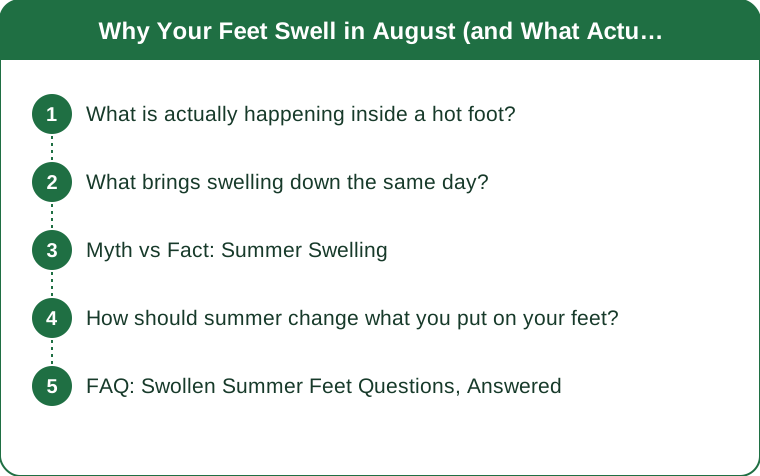
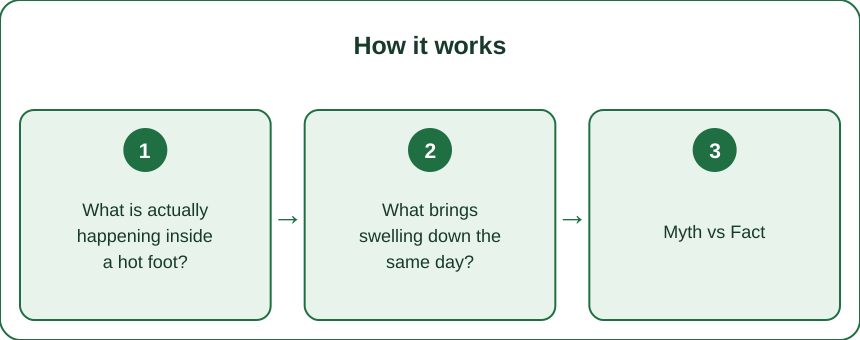
What is actually happening inside a hot foot?
A cooling system doing its job, with fluid as the side effect.
Heat triggers vasodilation. To shed warmth, your body widens blood vessels near the skin and routes more blood through them - the same mechanism that flushes your face. In the legs and feet, that means substantially more blood volume sitting in vessels closest to the surface.
Wider vessels leak more. Higher volume and pressure in the capillaries pushes more plasma fluid out into the surrounding tissue than usual. This is normal exchange turned up several notches - the fluid is supposed to be collected and returned by the lymphatic system and veins.
Gravity stacks the deck against your feet. Return flow from the feet is uphill work, powered largely by the calf muscle pump - every step squeezes veins and pushes blood upward past one-way valves. Stand still at a grill, a counter, or a concert for hours and the pump barely runs; sit with knees bent on a long drive or flight and you add a kink in the route. Fluid production up, fluid return down: the ankles keep the difference.
Summer habits pour in extra. Salty picnic and restaurant food raises sodium, which holds water. Alcohol dehydrates, then triggers rebound retention. And hormone cycles layer on top, which is why the same August day swells some weeks worse than others.
Why it eases overnight: lying flat removes gravity’s tax, the excess fluid re-enters circulation, and your kidneys process it - which is also why the first bathroom trip after a swollen evening is impressive. Morning feet are your baseline; evening feet are the day’s ledger.
What brings swelling down the same day?
Five tools, in order of how much they move.
1. Elevation - actually above the heart. Feet on a coffee table is nice; feet up the wall or on two pillows while lying down is treatment. Twenty minutes lets gravity refund what it collected. The luxury version: this position, air conditioning, and the end of a phone call you had to make anyway.
2. Run the calf pump on purpose. The pump only works when calves contract, so feed it: a ten-minute walk in the cool part of the evening beats sitting still, and when you cannot walk - desks, flights, long drives - do 20 to 30 heel raises every hour. Ankle circles and toe points count. This is the single best in-transit tool there is.
3. Cool water, briefly. Cool - not ice - water constricts the widened vessels and cuts the leak rate. Ten minutes in a basin, a cool shower finishing on the legs, or the time-honored hose-over-the-feet in the yard. Relief is fast, and combining it with elevation afterward doubles the value.
4. Compression socks for the long upright days. Graduated compression (15-20 mmHg is the everyday grade) squeezes hardest at the ankle and less going up, backstopping the valves all day. On-your-feet workdays, flights, road trips, and standing events are their moment. Put them on in the morning before swelling starts - and the modern versions come in colors that read as regular crew socks, or hide entirely under compression leggings if the day calls for those anyway.
5. Hydrate normally and watch the salt, not the water. The instinct to drink less when puffy is exactly backward - mild dehydration signals the body to retain harder. Steady water, produce-heavy meals for potassium, and moderation on the saltiest summer offenders does more than any restriction.
Timing note: the fixes compound. Evening walk, then cool rinse, then twenty minutes elevated is a 45-minute sequence that resets most heat-swollen feet completely.

Myth vs Fact: Summer Swelling
Myth: Drink less water and you will retain less. Fact: Backward. Under-hydration triggers retention hormones and concentrates sodium, making swelling worse. Steady normal water intake plus reasonable salt is the anti-swelling combination; restriction is the pro-swelling one.
Myth: Swollen feet mean something is wrong with your heart. Fact: Symmetric, end-of-day, gone-by-morning swelling in hot weather is overwhelmingly benign mechanics. The presentations that genuinely warrant medical attention look different: one-sided swelling, sudden onset, pain, redness or warmth, skin that stays dented for many seconds, breathlessness, or swelling that persists through the night. Those signs deserve a professional visit promptly - some urgently. This is general information, not medical advice.
Myth: Tighter shoes will hold the swelling down. Fact: Uniform pressure from graduated compression helps; a strap or seam pressing one spot just dams fluid around it and adds blisters. If a shoe fights your evening foot, the shoe loses - and so does the foot.
Myth: Salt is the only dietary villain. Fact: Salt leads, but alcohol does double work - dehydrate now, rebound-retain later - and low potassium quietly worsens sodium’s effect. The produce counter is genuinely part of the answer: melon, tomatoes, beans, and yogurt all push the sodium-potassium balance the right way.
Myth: Compression socks are for grandmothers and nurses. Fact: They are for gravity, which applies to everyone. Runners wear them, flight crews wear them, and anyone standing an eight-hour shift benefits. The stigma is twenty years out of date; the physics never had one.
How should summer change what you put on your feet?
Four adjustments, all cheap.
Shop for shoes in the late afternoon. Feet are at their daily maximum then - a shoe fitted at 10am is a half-size of regret by evening. This one scheduling change prevents most seasonal fit misery, and it applies double when buying for a trip.
Favor adjustability in the hot months. Straps with real buckles or velcro, laces you can back off, knit uppers with give. The foot changes volume across an August day; a shoe that cannot change with it turns into a tourniquet by dinner. The classic offender is the rigid cute sandal with the fixed narrow strap across the instep - beautiful at noon, incising by six.
Rethink the sock drawer seasonally. Thin wicking socks beat thick cotton in heat twice over: less bulk in a shrinking shoe, and drier skin, since macerated damp skin blisters faster on a swollen foot. For the standing-and-travel days, that is where the compression pairs live - under trousers or wide-leg pants they are invisible and working.
Give evening feet a runway. The half-size-generous sneakers, the adjustable slides, the house barefoot time - evening footwear should accommodate the foot you actually have at 7pm, not the one you had at breakfast. And when a special event demands the unforgiving shoes, front-load the day: elevation and a cool rinse before dressing buys the foot its best possible starting volume.
One habit to retire: the all-day flip-flop marathon. Zero support, a toe grip that fatigues the foot, and no adjustability - fine for the pool deck, rough as the primary vehicle for a 12,000-step swollen-season day. The feet limping through Labor Day weekend are usually wearing them.
FAQ: Swollen Summer Feet Questions, Answered
Why do my feet swell more in summer?
Heat widens blood vessels to shed warmth, which pushes more fluid out of capillaries into tissue - and gravity parks it in your feet, especially during long standing or sitting. Salty food, alcohol, and travel amplify it. Symmetric swelling that builds through a hot day and resolves overnight is the normal, mechanical kind.
How do I reduce foot swelling fast?
Stack three things: cool water on the feet and lower legs for ten minutes, then twenty minutes elevated genuinely above heart level, plus calf-pump work - a walk or sets of heel raises - earlier in the evening. The sequence refunds most heat swelling within an hour. For prevention on long upright days, graduated compression socks put on in the morning are the strongest tool.
When should I worry about swollen feet?
See a professional promptly for swelling that is one-sided, sudden, painful, red or warm, deeply pitting, accompanied by breathlessness, or persisting through the night - and urgently if breathing is involved. Hot-weather swelling is symmetric, mild, evening-weighted, and gone by morning; departures from that pattern are worth a proper look. This is general information, not medical advice.
Do compression socks help in hot weather?
Yes - heat swelling is exactly what graduated compression counters, and thin summer-weight versions exist precisely because demand peaks now. The 15-20 mmHg everyday grade, on before swelling starts, carries flights, road trips, and standing shifts. Warm legs are a fair complaint; the trade is usually worth it on the big days.
TL;DR:
- Heat widens vessels, vessels leak fluid, gravity collects it at your feet - swelling is cooling-system exhaust.
- Same-day reset: cool water, calf-pump walking or heel raises, then twenty real minutes elevated above the heart.
- Drink normally - water restriction backfires. Watch salt and alcohol instead.
- Compression socks on long upright days, shoes bought in the late afternoon, straps that adjust.
- Symmetric and gone-by-morning is benign; one-sided, painful, sudden, or persistent means a doctor, not a hack.
Your feet are keeping the day’s accounts in fluid. Close the books each evening - water, pump, elevation - and August stops leaving marks.
Keep Reading
This article is for general informational purposes only and is not medical advice. Always consult a qualified health professional for guidance specific to you.